
May 11, 2026
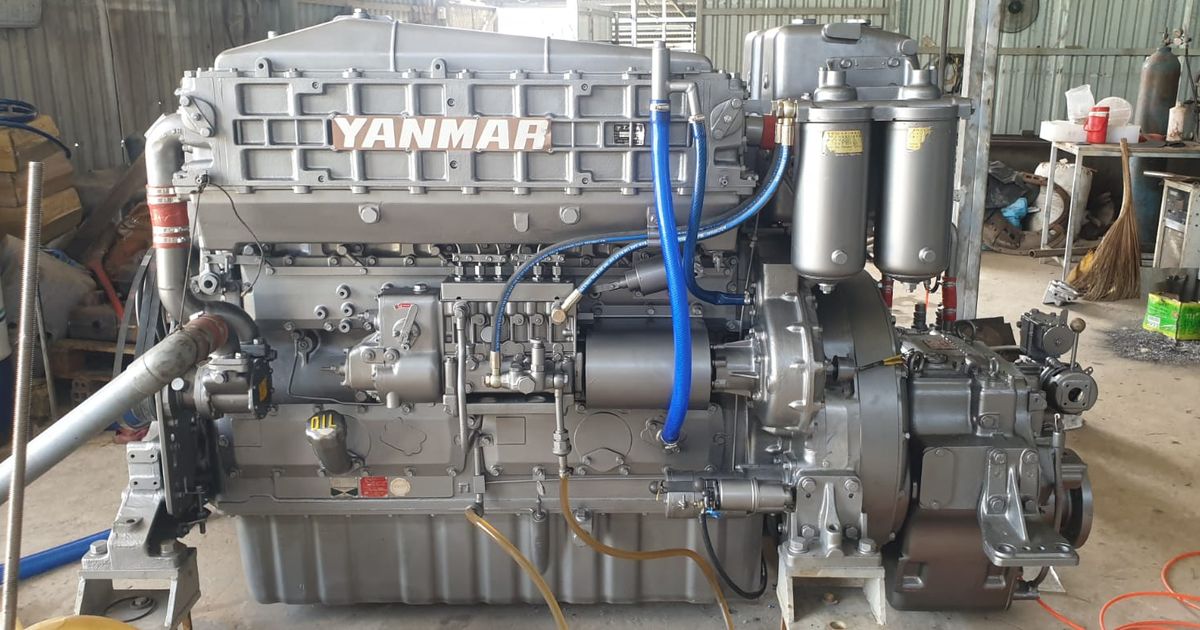
Yanmar 6LAAK-DT 400PS: The Workhorse Engine for Mid-Size Fishing Boats
Yanmar 6LAAK-DT 400PS: The Workhorse Engine for Mid-Size Fishing Boats
Ask any fishing vessel mechanic in Vietnam, Thailand, or the Philippines about the Yanmar 6LAAK-DT and you'll get the same answer: it's reliable, it's everywhere, and it keeps running when you treat it right.
That reputation didn't come by accident. The 6LAAK-DT has been the backbone of mid-size commercial fishing fleets across Southeast Asia for decades. This review explains why it's so popular, what it actually delivers, and what you need to know before buying one — new or used.
What Vessels Run the 6LAAK-DT?
This engine fits a specific category of working vessel:
- Fishing boats 50–80 feet (15–25 meters) in length — the most common commercial fishing size in the region
- Small cargo boats doing coastal routes
- Patrol boats and utility vessels that need reliability over speed
It's not the biggest engine and it's not the fastest. But at 400PS (roughly 395 horsepower) and 1,800 RPM, it's the right size for a vessel that spends long days — and sometimes weeks — at sea hauling serious weight.
If you're running a mid-size fishing operation and need an engine that will get you out and back reliably without constant mechanical surprises, the 6LAAK-DT is the answer most experienced operators land on.
Specs: What 400PS at 1,800 RPM Actually Means
400PS is the German measurement of horsepower (Pferdestärke). It's almost identical to 400 metric horsepower — about 395 brake horsepower in British/American terms. For practical purposes, call it 400HP.
1,800 RPM is the rated speed. This is a medium-speed engine — not a high-revving sports boat motor. Here's why that matters.
At 1,800 RPM, the engine:
- Experiences lower mechanical stress per rotation than engines running at 2,500–3,000 RPM
- Delivers torque (pulling power) smoothly and predictably
- Runs more quietly — important for long days at sea
A lower RPM rating doesn't mean less power. It means the power is delivered differently — in a way that's better suited for moving heavy fishing boats through ocean swells.
Why 1,800 RPM = Longer Engine Life
This is worth understanding properly because it affects how you think about running hours.
Every time an engine completes a combustion cycle, it puts stress on the pistons, rings, bearings, and valves. At 1,800 RPM, that happens 1,800 times per minute. At 2,400 RPM, it happens 2,400 times per minute — 33% more stress on every moving part for the same one minute of running.
Over thousands of hours, that difference adds up significantly. Engines rated at lower RPM — like the 6LAAK-DT — simply wear more slowly than comparable-power engines running at higher speeds. This is one reason the 6LAAK-DT is trusted for commercial use: it's built to last in the conditions where it operates.
A well-maintained 6LAAK-DT at 10,000 hours can still be in excellent working condition. That would be unusual for a high-speed engine of similar power.
Built for Saltwater — Marine-Grade Materials
Saltwater corrodes everything. Yanmar built the 6LAAK-DT for daily operation in this environment.
Key design details:
- Sea water-resistant alloys used on the block, head, and manifold components
- Wet-sleeve cylinder liners that are replaceable without replacing the entire block
- Marine-grade cooling system designed for raw water (sea water) as the primary coolant medium
This matters when you're shopping for a used engine. An engine that's been in a fishing boat all its life has been exposed to salt, humidity, and marine vibration from day one. The 6LAAK-DT is designed to handle exactly this. Less purpose-built engines in the same role show corrosion damage much faster.
Fuel Efficiency: Real-World Numbers
At full rated load (400PS / 1,800 RPM), the 6LAAK-DT burns approximately 75–85 liters per hour.
Most operators don't run at full throttle continuously. At a typical cruising load of 70–80% throttle, consumption drops to around 55–65 liters per hour.
For a fishing boat doing 12-hour trips, that's roughly 660–780 liters of fuel per day at cruising. Knowing this helps you calculate operating costs and fuel storage requirements for the trip lengths you're doing.
Maintenance — What to Service and When
The 6LAAK-DT is well-supported across Vietnam and Southeast Asia. Parts are widely available from Yanmar dealers and local marine suppliers. Here's a straightforward service schedule:
Service | Interval
Engine oil & oil filter | Every 250 hours
Primary fuel filter | Every 250 hours
Secondary fuel filter | Every 500 hours
Raw water impeller | Every 500 hours or annually
Air filter | Every 500 hours
Valve clearance check | Every 1,000 hours
Heat exchanger cleaning | Every 2,000 hours
Injector testing & service | Every 3,000 hours
Full engine inspection | Every 5,000 hours
One thing experienced mechanics emphasize: don't skip the raw water impeller. It's a small rubber part that costs very little, but a worn impeller leads to overheating, which leads to head damage. It's the most common reason otherwise good engines get hurt.
Replace vs. Overhaul: What Makes More Financial Sense?
At some point every engine owner faces this question. Here's a simple framework:
Overhaul makes sense when:
- The engine has a good service history and solid structure
- Only specific components are worn (injectors, turbo, one or two cylinders)
- Overhaul cost is clearly less than 50% of the cost of a replacement engine
Replacement makes more sense when:
- Multiple major systems need work simultaneously (cooling + fuel + compression)
- The engine has no service records and inspection shows widespread wear
- Overhaul cost approaches or exceeds the cost of a good used replacement
- The vessel needs to be back in service quickly (overhauls take time)
In Vietnam and Southeast Asia, a tested used 6LAAK-DT at a reasonable price is often better value than overhauling a worn-out example. The supply of used 6LAAK-DT engines in the region is relatively good because so many vessels run them.
What to Check Before You Buy a Used 6LAAK-DT
A few things specific to this model:
- Fuel system first — The 6LAAK-DT is prone to fuel air-lock after filter changes. Ask about recent fuel system work.
- Running hours vs. vessel age — Cross-reference the claimed hours with the vessel's age and fishing activity. 5,000 hours on a 15-year-old active fishing boat is suspicious.
- Gearbox condition — The 6LAAK-DT is usually paired with a heavy-duty reverse gear. Test forward and reverse engagement carefully before buying.
- Injector smoke test — Warm up the engine fully, then observe exhaust at full throttle. Black smoke means injector work is needed soon.
For a full inspection checklist, see our Used Yanmar Marine Engine Buying Guide.
Frequently Asked Questions
How many hours does a Yanmar 6LAAK-DT last?
With regular maintenance, 8,000–12,000 hours is a normal working life. Well-maintained examples with good service records have been known to run beyond that. The key is consistent oil changes and cooling system maintenance.
What is 400PS in horsepower?
400PS is approximately 395 brake horsepower (bhp) or 395 HP in American/British terms. The difference is small enough that the two are used interchangeably in most practical discussions.
Are parts for the Yanmar 6LAAK-DT available in Vietnam?
Yes. The 6LAAK-DT is one of the most common marine diesels in Vietnam's fishing fleet. Service parts — filters, impellers, belts, gaskets — are widely available. Major components may need to be ordered through a Yanmar dealer.
What size fishing boat is the 6LAAK-DT best for?
The 6LAAK-DT is well matched for fishing vessels in the 15–25 meter range (roughly 50–80 feet). Below that, a smaller engine is more efficient. Above that, you typically need the extra power of an engine like the 6LX-ET or 6AYM-WET.
View our current [Yanmar 6LAAK-DT listings](/products/yanmar-6laak-dt) or [contact us](/contact) to check availability and request engine details.
Also useful: [How to inspect a used Yanmar marine engine](/blog/how-to-buy-used-yanmar-marine-engine) | [Common Yanmar engine problems and fixes](/blog/yanmar-marine-diesel-engine-common-problems)
Related Articles
May 11, 2026
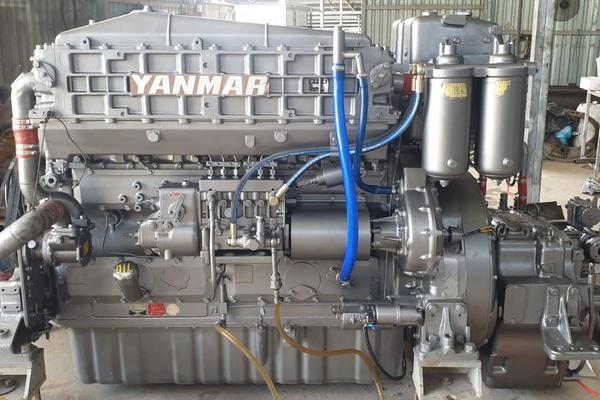
Yanmar 6LAAK-DT 400PS: The Workhorse Engine for Mid-Size Fishing Boats
The Yanmar 6LAAK-DT 400PS is one of the most common fishing boat engines in Southeast Asia. Here's why so many vessel operators choose it, what it can do, and what to watch for when buying used.
May 11, 2026
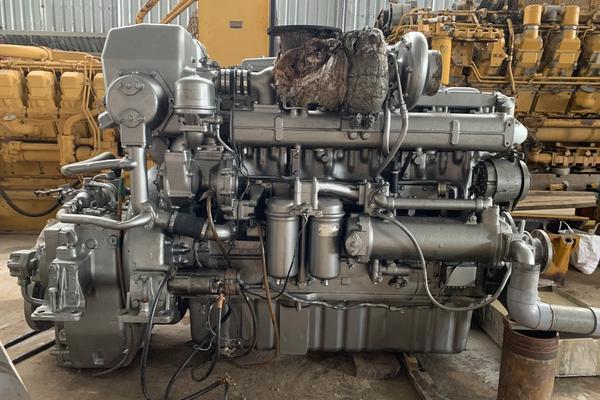
How to Buy a Used Yanmar Marine Engine: 10-Point Inspection Checklist
Buying a used Yanmar marine diesel engine? Don't skip these 10 checks. This guide walks you through what to look at — from running hours to test runs — before you put down your money.