
May 11, 2026
7 Common Yanmar Marine Diesel Engine Problems (and How to Fix Them)
7 Common Yanmar Marine Diesel Engine Problems (and How to Fix Them)
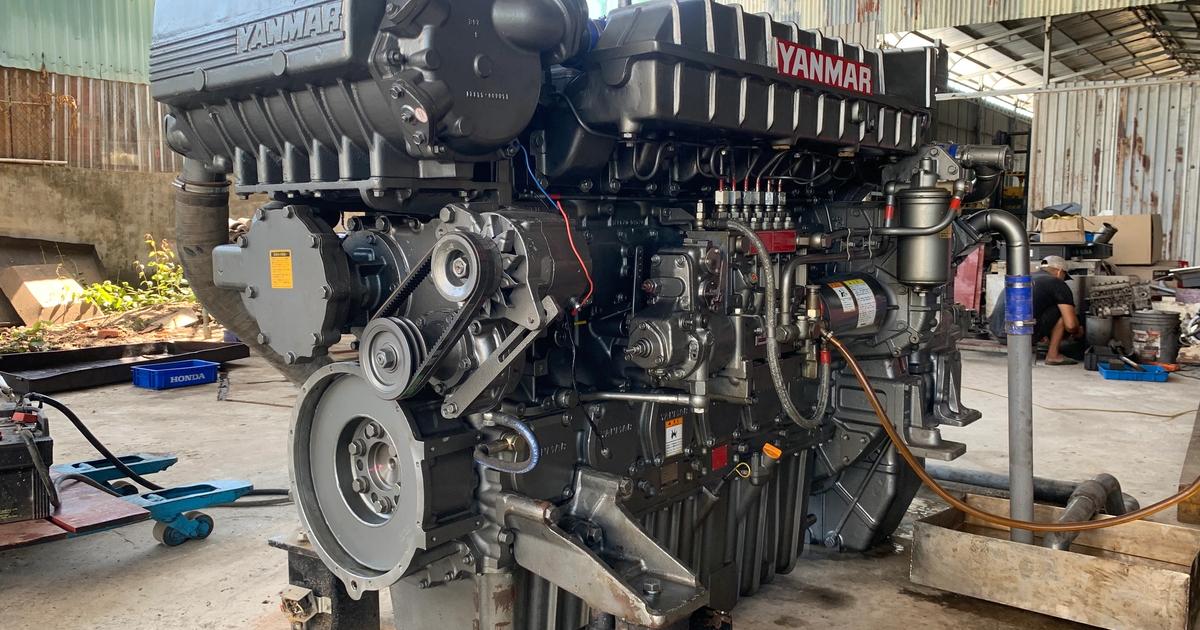
When your Yanmar marine diesel starts acting up, it can be hard to know where to start. A boat engine isn't like a car — you usually can't pull over and call someone for help.
This guide covers the 7 most common problems you'll see with Yanmar marine diesel engines like the 6LAAK-DT, 6LX-ET, and 6AYM-WET. For each problem, we'll explain what's causing it and what needs to be done.
1. Engine Is Hard to Start
What you notice: You turn the key and the engine cranks slowly, or it cranks fine but won't fire. Sometimes it starts eventually but takes several tries.
Common causes:
- Air in the fuel lines — This is the most common cause. When air gets into the fuel system (after a filter change, or if you ran out of fuel), the engine can't pull enough fuel to start. You need to bleed the fuel system.
- Weak or failed lift pump — The lift pump sends fuel from the tank to the injector pump. If it's weak, not enough fuel reaches the engine.
- Glow plug problems — In cold weather, glow plugs help heat the combustion chamber for starting. A failed glow plug makes cold starts difficult.
The 6LAAK-DT is known to have fuel air-lock issues if the filters haven't been changed in a while. If your engine is hard to start and you haven't changed the primary fuel filter recently, start there.
What to do: Bleed the fuel system first. If that doesn't fix it, test the lift pump pressure and check each glow plug with a multimeter.
2. Engine Overheating
What you notice: Temperature gauge goes too high, alarm sounds, engine loses power.
Common causes:
- Worn raw water impeller — This is the #1 reason marine diesels overheat. The impeller is a rubber part inside the raw water pump. It breaks down over time. Replace it every 500–1,000 hours or once a year, whichever comes first.
- Blocked heat exchanger — Scale and debris build up inside the heat exchanger over time. It needs cleaning every few years.
- Thermostat stuck closed — A stuck thermostat prevents coolant from circulating properly.
What to do: If the engine overheats, shut it down immediately. Running an overheated diesel even for a few minutes can warp the head. Check the impeller first — it's the cheapest and most likely fix.
3. Black Exhaust Smoke
What you notice: Thick black or dark gray smoke from the exhaust, especially under load.
Common causes:
- Clogged air filter — Engine can't get enough air, so fuel doesn't burn cleanly. This is the easiest fix — check the air filter first.
- Worn fuel injectors — Old injectors don't atomize fuel properly. The fuel doesn't burn completely and comes out as black smoke.
- Turbocharger failure — On turbocharged models (6LX-ET, 6AYM-WET), a bad turbo means less air gets compressed into the cylinder, causing rich combustion and black smoke.
How serious is it? A little black smoke when you accelerate hard is normal for diesels. Constant heavy black smoke at normal load is a problem that needs fixing.
What to do: Start with the air filter. If it's clean, have the injectors tested. Black smoke from turbo failure will usually come with a loss of power too.
4. White Exhaust Smoke
What you notice: White or light gray smoke from the exhaust. Not the same as steam — smoke has a smell.
Common causes:
- Water or coolant in the combustion chamber — This is the most serious cause. It usually means a blown head gasket or a cracked head. The white smoke is the water burning off inside the cylinder.
- Injector dripping — A leaking injector lets raw fuel into the cylinder between combustion cycles. This can also cause white smoke.
- Cold start smoke — In cold weather, brief white smoke on startup is normal. It goes away once the engine warms up. If it continues after warm-up, that's the problem.
What to do: Check the coolant level. If it keeps going down with no obvious external leak, coolant is getting into the engine. This needs immediate attention — continuing to run risks serious engine damage.
5. Blue Exhaust Smoke
What you notice: Blue or bluish-white smoke from the exhaust.
Common causes:
- Burning engine oil — Oil is getting into the combustion chamber and burning. Most common causes are worn piston rings or valve stem seals.
- Turbo seal failure — Oil leaks past the turbocharger seals into the air intake and then gets burned in the cylinders.
When to stop running immediately: If the smoke is heavy and continuous, stop the engine. Running with heavy oil burning causes further damage and can lead to complete engine failure.
What to do: Check the oil level and how fast it drops. A turbo seal leak is often cheaper to fix than worn piston rings, which require an engine overhaul.
6. Loss of Power or RPM Drops
What you notice: The engine won't reach full RPM, or power drops suddenly while underway.
Common causes:
- Clogged fuel filters — The most common and easiest fix. A dirty secondary filter starves the engine of fuel.
- Turbo boost leak — A cracked or loose hose between the turbo and the intake manifold leaks compressed air, reducing power significantly.
- Governor fault — The fuel injection governor controls RPM. A fault here causes inconsistent power delivery.
What to do: Change both fuel filters first. If that doesn't help, check all the turbo hoses for cracks or loose clamps. A boost leak test (pressurize the intake system and listen for leaks) will find it quickly.
7. Knocking Noise
What you notice: A sharp knock or clatter from the engine, especially under load.
Two different types — and one is much more serious:
- Injector knock — A sharp, high-pitched ticking that changes when you cycle fuel to each injector. This usually means an injector is firing unevenly. Annoying, but not immediately dangerous.
- Bearing knock — A deep, heavy thud from inside the engine. This is serious. It means a connecting rod bearing or main bearing is worn. If you hear this, shut the engine down.
How to tell the difference: Injector knock is higher pitched and often rhythmic with each cylinder. Bearing knock is lower and gets louder as RPM increases. When in doubt, stop the engine and get a professional to listen.
Maintenance Service Intervals
Here's a quick comparison for the three most common Yanmar marine diesel models:
Service Item | 6LAAK-DT | 6LX-ET | 6AYM-WET
Engine oil & filter | Every 250 hrs | Every 250 hrs | Every 250 hrs
Fuel filter (primary) | Every 250 hrs | Every 250 hrs | Every 250 hrs
Fuel filter (secondary) | Every 500 hrs | Every 500 hrs | Every 500 hrs
Raw water impeller | Every 500 hrs or 1 yr | Every 500 hrs or 1 yr | Every 1,000 hrs or 1 yr
Heat exchanger cleaning | Every 2,000 hrs | Every 2,000 hrs | Every 2,000 hrs
Valve clearance check | Every 1,000 hrs | Every 1,000 hrs | Every 1,000 hrs
Injector service | Every 3,000 hrs | Every 2,000 hrs | Every 3,000 hrs
When to Replace Instead of Repair
There comes a point where the repair cost is more than the engine is worth. Here's a rough guide:
- Major overhaul (rings, bearings, head): Typically costs more than buying a tested used engine of the same model
- Turbo replacement + injector service + cooling overhaul all at once: Usually signals an engine at the end of its economic life
- Engine with unknown history and multiple problems: Too risky to invest heavily in
A tested, inspected used Yanmar engine at a fair price is often the smarter financial decision compared to an expensive overhaul on an old engine.
Frequently Asked Questions
Why does my Yanmar marine engine smoke on startup?
Brief white smoke on a cold start is usually just condensation burning off and is normal. It should clear up within a minute or two of running. If it continues after the engine warms up, it points to a fuel or coolant problem.
How often should I service my Yanmar marine diesel?
At minimum, change the engine oil, oil filter, and primary fuel filter every 250 hours. The raw water impeller should be changed every 500 hours or once a year — whichever comes first.
Can I still run my engine if it's blowing black smoke?
A small amount of black smoke under hard acceleration is okay. Heavy, continuous black smoke means the engine is not burning fuel properly, and you're causing damage. Fix it before continuing regular operation.
Is it better to repair or replace a problem Yanmar engine?
It depends on the problem and the engine's age. Cooling system and fuel system repairs are usually worth doing. Major overhauls on high-hour engines often cost more than buying a tested used replacement. Browse our stock of Yanmar 6LAAK-DT, Yanmar 6LX-ET, and Yanmar 6AYM-WET engines.
Considering a replacement instead of a costly repair? [Browse our Yanmar engine inventory](/products) or contact us to discuss the right option for your vessel.
Related Articles
May 11, 2026
7 Common Yanmar Marine Diesel Engine Problems (and How to Fix Them)
Is your Yanmar marine diesel hard to start, overheating, or blowing colored smoke? Here are 7 common problems with Yanmar engines — what causes them and what you can do about it.