
May 11, 2026
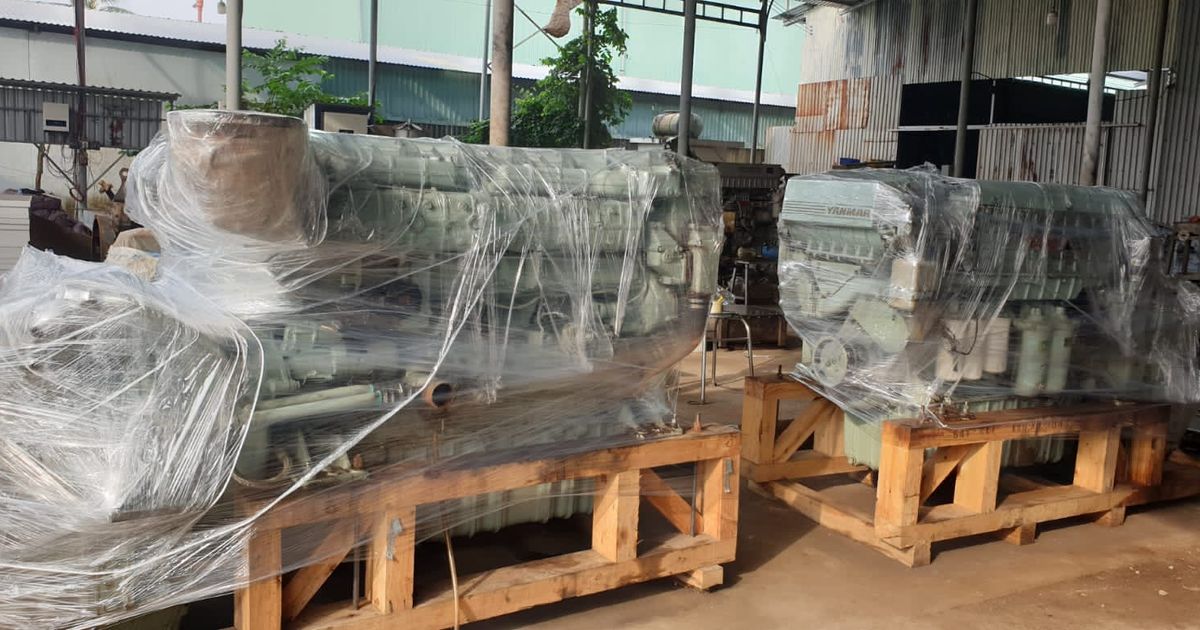
Yanmar 6LX-ET 650HP Marine Diesel Engine Review: Built for Speed
Yanmar 6LX-ET 650HP Marine Diesel Engine Review: Built for Speed
Not every vessel moves at the pace of a loaded fishing trawler. Some need to get somewhere fast — patrol boats responding to emergencies, high-speed fishing boats chasing fish in distant grounds, ferries on tight schedules. For these applications, 400 horsepower is not enough.
The Yanmar 6LX-ET is a different class of engine. 650 horsepower, turbocharged, intercooled, and rated at 1,900 RPM. It's built for operators who need speed without sacrificing reliability.
This review covers what you need to know about the 6LX-ET — and how to decide whether it's the right engine for your vessel.
Who Actually Needs 650HP?
Before getting into specs, it's worth being direct about what kind of vessel this engine suits.
Fast fishing boats — vessels designed to reach distant fishing grounds quickly and return to port faster than the competition. Speed means more flexibility on where and when you fish.
Patrol and coast guard vessels — government and security boats that need to chase, intercept, or respond quickly. Speed is the entire point.
Small ferries and passenger boats — routes where schedule reliability matters and passengers pay for a faster crossing.
Offshore supply boats — support vessels for oil and gas operations where time on station equals money.
If your vessel is a traditional slow trawler or a cargo boat where speed isn't a priority, the 6LX-ET is more engine than you need. But if speed and power matter for your operation, this engine earns its place.
6LX-ET Specs: Turbocharged and Intercooled
The technical specification that sets the LX series apart from the LA series (like the 6LAAK-DT) is the turbocharger and intercooler combination.
Key specifications:
- Power output: 650HP (approximately 478 kW)
- Rated RPM: 1,900 RPM
- Configuration: 6-cylinder in-line diesel
- Induction: Turbocharged + intercooled (also called charge air cooled)
- Fuel system: Direct injection
What turbocharging + intercooling actually does:
A turbocharger compresses the intake air before it enters the cylinders. More compressed air = more oxygen = more fuel can be burned = more power from the same engine displacement.
An intercooler (also called a charge air cooler) cools that compressed air before it enters the cylinders. Cooler air is denser — it contains even more oxygen molecules. This is why a turbocharged and intercooled engine produces noticeably more power than a turbocharged-only engine of the same size.
The practical result: the 6LX-ET delivers a very good power-to-weight ratio for its class. You get 650HP from an engine that's significantly smaller and lighter than a naturally aspirated engine making the same power.
6LX-ET vs. 6LXS-GT: When to Step Up
The Yanmar LX series includes two main variants you'll encounter when shopping:
Feature | 6LX-ET | 6LXS-GT
Power output | 650HP | 850PS (~838HP)
RPM rating | 1,900 RPM | 2,000 RPM
Best suited for | Fast commercial vessels, patrol boats | Very high-speed vessels, racing workboats
Fuel consumption | Lower | Higher
Parts cost | Moderate | Higher
Running cost | Lower | Higher
Choose the 6LX-ET if:
- 650HP is enough for your vessel's speed requirements
- You want lower running and maintenance costs
- The engine will work hard but within a normal commercial duty cycle
Choose the 6LXS-GT if:
- You genuinely need more than 650HP
- Your vessel is specifically designed for very high speeds
- The higher fuel and maintenance cost is justified by your operation
For most commercial buyers — fishing boats, patrol vessels, ferries — the 6LX-ET is the more practical choice. The 6LXS-GT is a step up that many operators don't actually need.
Fuel Burn at 1,900 RPM: Real Operating Costs
At full rated power (650HP / 1,900 RPM), the 6LX-ET burns approximately 110–125 liters per hour.
At a typical working cruise (75–80% load), expect 80–95 liters per hour.
How does this compare to a smaller engine? The 6LAAK-DT at 400PS burns around 55–65 liters per hour at cruise. The 6LX-ET burns more — but it's also moving a faster vessel, covering more distance per hour. The fuel cost per kilometer traveled is actually closer than the raw liters-per-hour comparison suggests.
For an operation where speed matters, the extra fuel cost is often justified by what speed enables: more trips, better fishing grounds, faster response times, tighter ferry schedules.
High-RPM Maintenance: What Wears Faster
Running at 1,900 RPM puts more stress on certain components than a 1,800 RPM engine like the 6LAAK-DT. This isn't a problem — it's just the trade-off that comes with higher performance. Know what needs attention more often:
Turbocharger
The turbo works harder on the LX-ET than on naturally aspirated engines. Turbo bearings and seals have a finite life. Signs of a wearing turbo: slight smoke on acceleration, shaft play when you grab it by hand. Service or replace proactively.
Intercooler
The intercooler can accumulate oil mist from the crankcase ventilation system. This reduces cooling efficiency and can cause intake air restriction. Clean it at major service intervals.
Fuel injectors
Higher injection pressure and higher RPM means injectors wear faster than on lower-speed engines. Service interval on the 6LX-ET is typically every 2,000 hours — shorter than the 6LAAK-DT's 3,000-hour interval.
Recommended service intervals for the 6LX-ET:
Service | Interval
Engine oil & filter | Every 250 hours
Primary fuel filter | Every 250 hours
Secondary fuel filter | Every 500 hours
Raw water impeller | Every 500 hours or annually
Valve clearance | Every 1,000 hours
Intercooler inspection | Every 1,500 hours
Injector service | Every 2,000 hours
Turbo inspection | Every 2,000 hours
Heat exchanger cleaning | Every 2,000 hours
Stick to this schedule and the 6LX-ET will give you 6,000–10,000 hours of reliable service.
What to Inspect on a Used 6LX-ET Before Buying
The 6LX-ET has more components that wear than a simpler engine — specifically the turbo and intercooler. When shopping used, pay extra attention to:
1. Turbo shaft play
Grab the turbocharger shaft and move it up and down. A small amount of movement is normal. Significant play means the bearings are worn. Budget for turbo replacement.
2. Intercooler condition
If possible, remove the intercooler for inspection. Look for internal oil coating, scale deposits, or physical damage to the fins. A dirty intercooler means reduced power and efficiency.
3. Smoke at full throttle
Warm up the engine completely, then bring it to full throttle. Watch for:
- Black smoke = injectors or air restriction
- Blue smoke = burning oil, possibly turbo seals
- White smoke = coolant in combustion, serious problem
4. Oil consumption rate
Ask the current owner how often they top up the oil between changes. Moderate consumption is normal. Heavy consumption means worn rings or turbo seals.
5. Running hours vs. maintenance records
A 6LX-ET with 7,000 hours and complete service records is a very different purchase from one with 7,000 hours and no documentation.
For a full inspection process, see our Used Yanmar Marine Engine Buying Guide.
Acceptable Running Hours for a Used 6LX-ET
- Under 4,000 hours: Low hours, likely in excellent shape if maintained
- 4,000–7,000 hours: Normal working range. Inspect turbo and injectors carefully.
- 7,000–10,000 hours: High but workable with full service records. Expect to budget for turbo and injector service.
- Over 10,000 hours: Buy only with a full inspection and documented service history.
Frequently Asked Questions
What's the difference between the Yanmar 6LX-ET and the 6LXS-GT?
Both are from Yanmar's LX series. The 6LX-ET produces 650HP at 1,900 RPM. The 6LXS-GT produces approximately 850PS (around 838HP) at 2,000 RPM. The GT is faster and more powerful but burns more fuel and costs more to maintain. Most commercial buyers are better served by the ET.
Is the Yanmar 6LX-ET suitable for a passenger ferry?
Yes, for small ferries up to approximately 25–30 meters. The power output and speed capability make it a common choice for inter-island passenger routes where schedule reliability matters.
How long does a Yanmar 6LX-ET last?
With regular maintenance following the service intervals above, expect 6,000–10,000 hours of working life. Turbocharger and injector maintenance is the most important factor in the upper end of that range.
Can I find Yanmar 6LX-ET parts in Southeast Asia?
Yes. The LX series is well-represented in the region. Standard service parts are available from authorized Yanmar dealers in Vietnam, Thailand, Singapore, and Indonesia. For turbocharger and injection pump components, lead times from Japan or Singapore are typically 2–4 weeks.
Is the 6LX-ET in stock?
We carry used 6LX-ET units. View our current listings or contact us to ask about current availability and condition details.
View our [Yanmar 6LX-ET listings](/products/yanmar-6lx-et) or talk to us about the right engine for your vessel.
Also useful: [How to inspect a used Yanmar marine engine](/blog/how-to-buy-used-yanmar-marine-engine) | [Common Yanmar engine problems and fixes](/blog/yanmar-marine-diesel-engine-common-problems) | [Yanmar 6LXS-GT listings](/products/yanmar-6lxs-gt)
Related Articles
May 11, 2026
Yanmar 6LX-ET 650HP Marine Diesel Engine Review: Built for Speed
The Yanmar 6LX-ET delivers 650HP for fast fishing boats, patrol vessels, and small ferries. This review covers specs, real fuel costs, maintenance, and how it compares to the 6LXS-GT.