
May 11, 2026
Yanmar 6AYM-WET: Marine Generator or Propulsion Engine — What Buyers Need to Know
Yanmar 6AYM-WET: Marine Generator or Propulsion Engine — What Buyers Need to Know
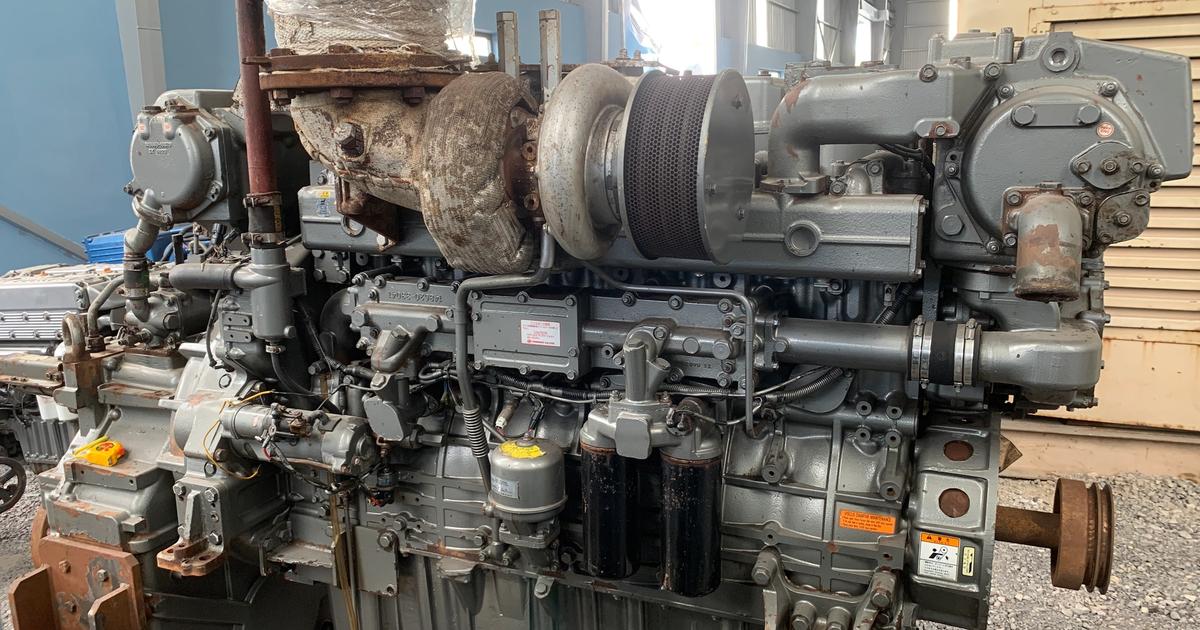
The Yanmar 6AYM-WET is one of those engines that surprises people when they first learn about it. The same engine block — the same 6-cylinder diesel — is sold in two completely different roles: as a generator set engine and as a propulsion engine. That's unusual, and it's worth understanding before you buy.
This guide covers everything you need to know about the 6AYM-WET if you're considering buying one, whether for power generation or to move a vessel.
What Is the Yanmar 6AYM-WET?
The 6AYM is Yanmar's large-displacement commercial marine diesel. Here are the basics:
- Configuration: 6-cylinder in-line diesel
- Displacement: 20.38 liters
- Power output: 610 kW (about 830 horsepower)
- Rated RPM: 1,900 RPM
- Fuel system: Direct injection with turbocharger and intercooler
- Emissions: IMO Tier II compliant
It's a big engine. 20 liters of displacement is in the same class as large truck and heavy equipment engines, but this one is built and sealed for marine use — salt water, humidity, and the constant vibration that comes with being at sea.
Generator Set vs. Propulsion Engine — What's the Difference?
This is the most common question about the 6AYM-WET, and it's a fair one.
As a generator engine, the 6AYM-WET is coupled to an alternator. It produces electricity — typically for vessels that need a lot of onboard power: refrigeration for fish holds, hydraulic systems, lighting for large vessels, or power for offshore equipment. The engine runs at a constant speed (usually 1,500 or 1,800 RPM for 50Hz or 60Hz power) regardless of electrical load.
As a propulsion engine, the same block is connected to a shaft and propeller. Here it drives the vessel through the water. The throttle controls RPM directly. It operates across a wider RPM range depending on vessel speed.
Which one do you need? If you're buying to generate electricity aboard a large vessel, you want the generator variant — with the alternator already configured. If you're replacing a propulsion engine or adding a new one, you want the propulsion variant with the correct gearbox ratio for your shaft.
The internal engine is essentially the same. The difference is in the mounting, coupling, and peripheral equipment attached to it.
Who Uses the 6AYM-WET?
You'll find this engine on:
- Large commercial fishing vessels — especially those with refrigerated seawater (RSW) systems that need significant onboard power
- Offshore support boats — platform supply vessels, crew transfer boats
- Commercial workboats — tugs, barges, coastal cargo vessels
It's not a small-boat engine. The size and power output place it squarely in commercial vessel territory. Vessels running this engine are typically over 30 meters in length.
Fuel Efficiency — What to Expect
The 6AYM-WET runs direct injection with a turbocharger and intercooler. The intercooler cools the compressed air before it enters the cylinders — this means denser air, more oxygen, better combustion efficiency.
At full rated power (610 kW / 1,900 RPM), expect fuel consumption in the range of 140–160 liters per hour. At cruising load (around 75% of rated power), consumption typically drops to 90–110 liters per hour.
These are reference figures. Actual consumption depends on vessel weight, hull condition, sea state, and how the engine is loaded. A well-maintained 6AYM-WET running at proper load burns fuel predictably and efficiently for its class.
IMO Tier II Compliance — Why It Matters
The 6AYM-WET meets IMO Tier II emission standards for NOx (nitrogen oxide) emissions. This matters for two practical reasons:
1. Port access. Some ports and coastal zones require vessels to meet minimum emission standards. An IMO Tier II engine keeps your vessel compliant in international waters and in ports that enforce these rules.
2. Resale value. As emission regulations tighten globally, older non-compliant engines become harder to operate and sell. An IMO Tier II engine holds its value better and causes fewer compliance headaches over its working life.
What Running Hours Are Acceptable on a Used 6AYM-WET?
Because the 6AYM-WET is used in commercial applications where it often runs around the clock, it's built for long service life.
- Under 8,000 hours: Low hours for this engine class. Excellent condition if maintained.
- 8,000–12,000 hours: Normal working range. Inspect carefully, especially the fuel system and cooling system.
- 12,000–15,000 hours: High but not unusual for well-maintained commercial engines. Expect some components to need attention soon — injectors, turbo, heat exchanger.
- Over 15,000 hours: Buy only with full service records and after a thorough inspection.
The key is not just hours — it's maintenance history. A 12,000-hour engine with regular oil changes, impeller replacements, and injector service is often in better shape than a 6,000-hour engine that was neglected.
Spare Parts Availability in Vietnam and Southeast Asia
One of the practical concerns for buyers in Vietnam, Cambodia, Thailand, and nearby markets is whether parts are available locally when something needs replacing.
The 6AYM-WET is widely used in the region's commercial fishing and offshore sector, so the major service parts — injectors, fuel filters, impellers, belts, heat exchanger elements — are available through authorized Yanmar dealers and well-stocked marine parts suppliers.
For major components (turbochargers, injection pumps), delivery times from Japan or Singapore are typically 2–4 weeks. This is worth planning around if your vessel relies on the engine continuously.
Should You Buy the Generator Variant or the Propulsion Variant?
A quick decision guide:
You need... | Buy the...
Electricity for onboard systems | Generator variant (with alternator)
To push the vessel through water | Propulsion variant (with gearbox)
To replace an existing propulsion engine | Propulsion variant — match your shaft specs
Power for RSW systems on a fishing vessel | Generator variant
If you're unsure, send us your vessel specifications — we can help you confirm the right configuration.
Frequently Asked Questions
What is the difference between the Yanmar 6AYM-WET and the 6AYM-ETE?
The 6AYM-ETE is an earlier variant. The 6AYM-WET is the updated version with improved fuel injection and emissions compliance (IMO Tier II). For buyers who need emissions-compliant engines, the WET variant is the right choice.
What does 1,900 RPM mean for fuel economy?
Lower RPM engines generally burn fuel more steadily and experience less wear than high-speed engines. At 1,900 RPM, the 6AYM-WET is in a mid-range commercial sweet spot — it delivers high power while maintaining reasonable engine longevity.
Can the generator variant be converted to propulsion?
In theory it's the same engine block, but the peripheral systems — cooling configuration, mounting, coupling — are set up differently. Conversion is possible but requires significant engineering work and is usually not cost-effective. Buy the right variant from the start.
Where can I see Yanmar 6AYM-WET engines available for sale?
We keep 6AYM-WET units in stock. View our current 6AYM-WET listings or contact us to request a quote and inspection report.
See our current [Yanmar 6AYM-WET listings](/products/yanmar-6aym-wet) or [reach out](/contact) with your vessel specs for a recommendation.
Also useful: [How to inspect a used Yanmar marine engine](/blog/how-to-buy-used-yanmar-marine-engine) | [Common Yanmar engine problems and fixes](/blog/yanmar-marine-diesel-engine-common-problems)
Related Articles
May 11, 2026
Yanmar 6AYM-WET: Marine Generator or Propulsion Engine — What Buyers Need to Know
The Yanmar 6AYM-WET runs as both a generator and a propulsion engine. This guide explains the difference, who uses it, fuel costs, running hours, and where to find parts in Southeast Asia.